

Please note we will be closed on Saturday, August 15th for a family event.
✦Please leave us a message at 613-729-1447 or send us an email at info@chinookhottubs.ca if you have any questions.
✦We will return on Tuesday, August 17th and will respond to all messages then.
✦Please note we will be closed on Saturday, August 15th for a family event.
✦Please leave us a message at 613-729-1447 or send us an email at info@chinookhottubs.ca if you have any questions.
✦We will return on Tuesday, August 17th and will respond to all messages then.
✦
Traditional Sauna ownership has moved well beyond gyms and spas into everyday Canadian homes. More families now see a home sauna as a genuine wellness investment rather than an occasional luxury reserved for vacation. Indoor placement in particular offers year-round convenience that outdoor units simply can’t match during the coldest months.
Indoor Saunas for Your Home eliminate the walk through snow or rain that outdoor units often require. That convenience alone significantly increases how often owners actually use their sauna throughout the year.
A sauna that gets used weekly delivers far more value than one that sits idle during harsh weather. Indoor Saunas for Your Home remove the biggest barrier to that regular, consistent use.
Indoor traditional saunas rely on heated rocks and controlled humidity to create the classic sauna experience many people grew up associating with wellness culture. The heat feels different from other spa experiences, dry and intense rather than damp.
Installing indoor traditional saunas requires proper ventilation planning and a dedicated electrical circuit, both worth confirming with a professional before construction begins.
A finished basement or spare room often works well for indoor traditional saunas, provided adequate ceiling height and airflow are available.
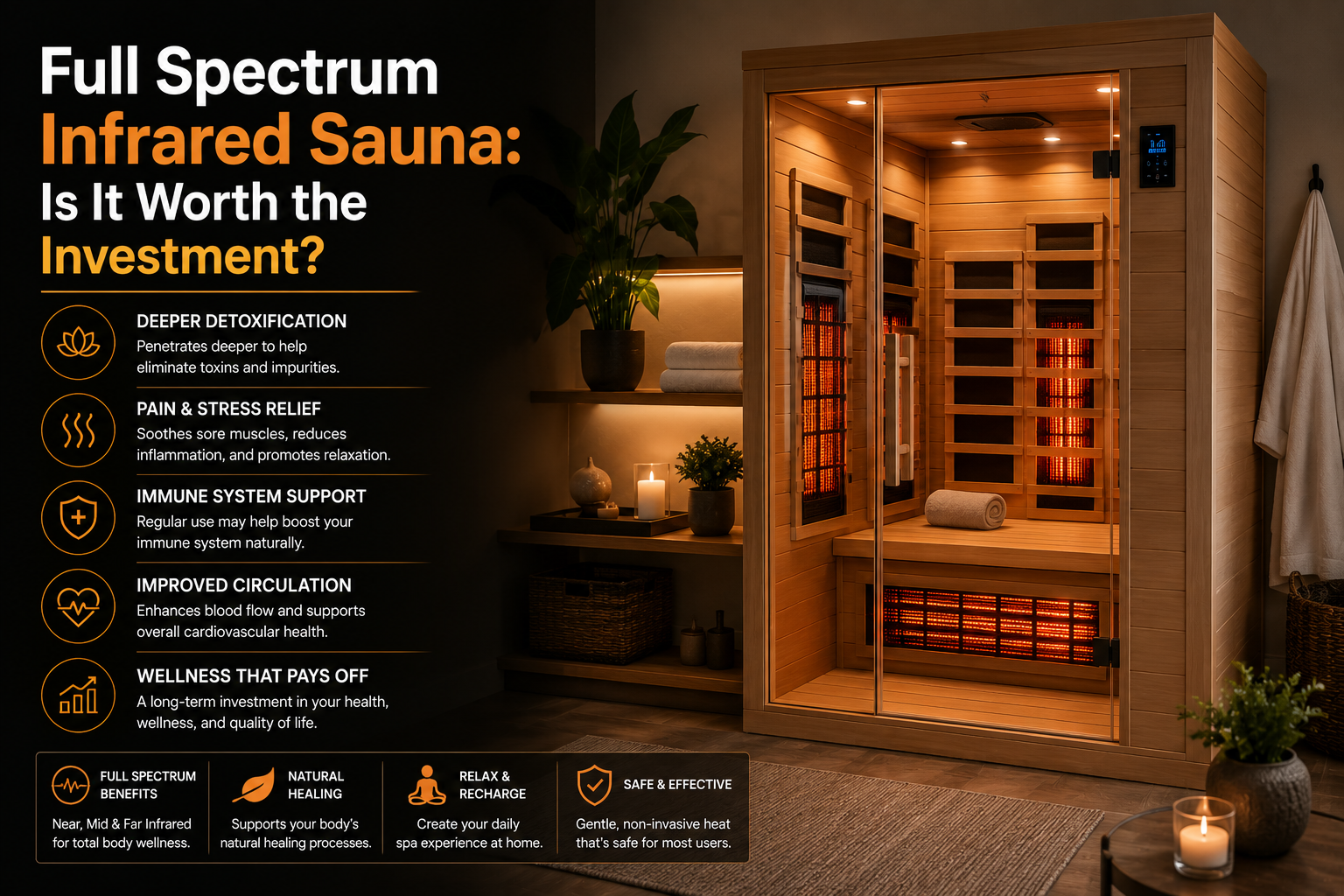
Traditional sauna vs infrared sauna comparisons come up constantly among first-time buyers. Traditional units heat the air around you, while infrared models heat the body directly at a lower ambient temperature.
Choosing between traditional sauna vs infrared sauna often comes down to personal preference. Some people prefer the intense heat of a traditional setup, while others find infrared more comfortable for longer sessions.
A Traditional Sauna delivers the most value when it fits naturally into an existing routine, whether that means post-workout recovery or a simple evening wind down. Placement matters as much as the unit itself.
Choosing indoor over outdoor, when space allows, tends to produce higher long-term satisfaction simply because the sauna becomes easier to use consistently, season after season.
Budget planning should account for both the unit itself and installation requirements like electrical work or ventilation upgrades. A traditional sauna vs infrared sauna cost comparison often favors infrared slightly on energy use, though traditional units typically offer a more authentic, familiar heat experience.
Energy consumption varies between heater types and session frequency. Regular users should factor ongoing electricity costs into their overall budget rather than focusing solely on the upfront purchase price.
Households with consistent, year-round usage plans benefit most from Indoor Saunas for Your Home over an outdoor alternative. Athletes recovering from training, people managing chronic muscle tension, and anyone prioritizing a reliable wellness routine all tend to see the strongest return on their investment.
Consistency matters more than intensity when it comes to sauna benefits. Two or three shorter sessions each week tend to produce better long-term results than one occasional lengthy session followed by weeks of inactivity.
Pairing sauna use with adequate hydration before and after each session supports the body’s natural recovery process and helps sessions feel more comfortable overall.
An indoor sauna earns its place through consistent, year-round use rather than occasional novelty. Chinook Hot Tubs & Saunas offers a full Traditional Sauna lineup suited to different home layouts.
For most regular users, yes. The convenience of year-round access without weather exposure tends to increase actual usage frequency compared to outdoor units.
Most sessions run between fifteen and twenty minutes, though beginners often start shorter and build up tolerance gradually over several sessions.
Yes, proper airflow planning prevents excess humidity buildup and keeps the surrounding space comfortable, which a professional installer can help assess before setup.
Many compact models fit basement spaces well, provided there’s adequate ceiling height and access to a dedicated electrical circuit for the heater.