


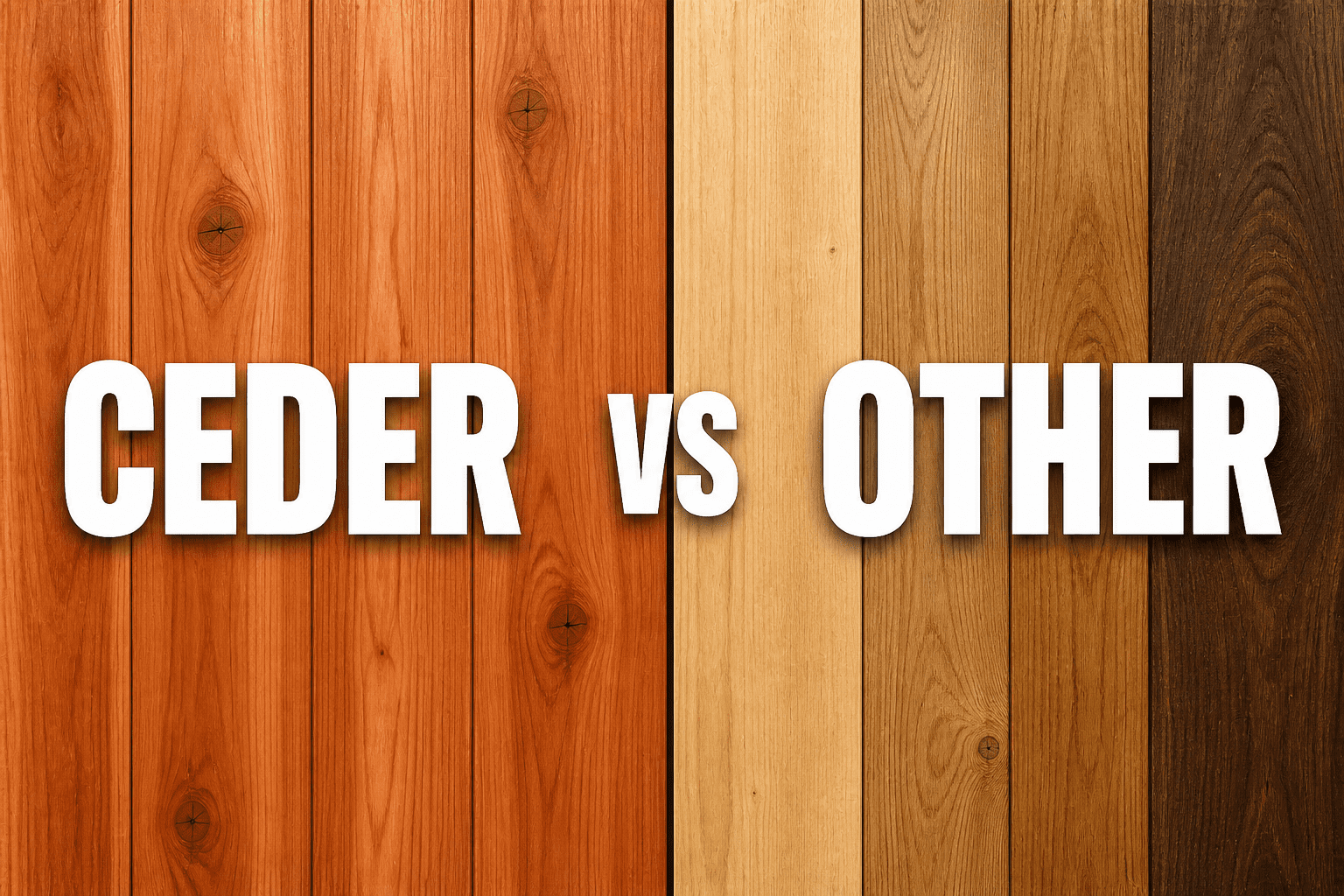
Before building a sauna, learn about these things,
The material you choose affects how the sauna heats
How long does it last
How it smells
and how it feels to be inside it.
There is a reason cedar keeps coming up in every conversation about sauna wood. But it is worth understanding the full picture so you can make a choice that fits your specific space, budget, and goals.
Let us start from the ground up!
The floor of a sauna takes more abuse than any other surface. It deals with water, heat, bare feet, and the constant cycle of expanding and contracting wood.
Teak is one of the best options for sauna flooring because of its naturally high oil content, which makes it resistant to moisture and incredibly durable. Cedar works beautifully as well and has the advantage of being softer and warmer underfoot than teak.
Some sauna owners opt for ceramic tile in the lower section, particularly in steam saunas where the floor stays quite wet. Tile is easy to clean and does not absorb moisture, though it can feel cold if your sauna takes time to reach temperature.
Whatever material you choose for the floor, make sure there is a drainage point or that the floor is slightly sloped to prevent water from pooling. Standing moisture is the fastest way to shorten the life of any sauna floor material.
Western Red Cedar is the most popular sauna wood in North America, and it has genuinely earned that reputation. It is naturally aromatic, releasing that warm, woody scent that most people associate with the sauna experience. It is also naturally resistant to moisture, bacteria, and decay without any need for chemical treatment.
Cedar has a low density, which means it heats up quickly and does not hold onto heat in a way that makes touching the surfaces uncomfortable. It stays relatively cool to the touch even when the air temperature is high, which makes it both safe and pleasant.
One thing to keep in mind is that cedar is a softer wood, so it can dent or scratch more easily than harder alternatives. But for most sauna applications, this is a very small trade-off for all the benefits it brings.
Nordic Spruce is widely used in Scandinavian sauna traditions and is regarded as the most authentic choice for traditional Finnish-style saunas. It has a light, pale tone that gives saunas a clean and minimalist appearance.
Spruce is very light in weight and heats up quickly. It does have a higher resin content than cedar, which can cause some weeping in extreme heat conditions, particularly around knots. Choosing kiln-dried, knot-free Nordic spruce eliminates most of this issue.
Hemlock is a popular alternative to cedar, particularly for people who prefer a more neutral wood without the strong aromatic character. It has a fine, straight grain, a pleasant pale color, and performs very well in heat and humidity.
Hemlock is slightly denser than cedar, which means it takes a little longer to heat up but also holds temperature steadily once it gets there. It is an excellent all-around sauna wood and often comes in at a slightly lower price point than cedar.
Aspen is the right choice for people who are sensitive to wood resins or strong scents. It is virtually resin-free, very light, and has an almost white color that gives saunas a beautifully bright and airy feel.
Aspen does not emit any noticeable scent, which makes it a great option for medical or therapeutic saunas where neutral air quality is important. It is also allergy-friendly, which is a significant advantage for some users.
Basswood is soft, light, and hypoallergenic. Like aspen, it is very low in resins and has no strong scent. It has a clean, consistent appearance and is often used in infrared saunas because it performs predictably under steady, lower-level heat.
If you are building your own sauna, a pre-cut sauna material kit can save you enormous time. A good kit will include all the tongue-and-groove boards needed for walls and benches, kiln-dried to reduce the likelihood of warping or splitting once the sauna is in use.
Look for kits that specify the wood species clearly and confirm that the lumber is free of knots and surface treatments. Knots can become incredibly hot in a sauna and cause discomfort when touched, so knot-free wood is not just an aesthetic preference; it is a safety and comfort consideration.
Some kits also include pre-fabricated bench frames, door frames, and even basic ventilation components. These are worth considering if you want a streamlined build process.
After everything, Western Red Cedar continues to stand out as the best overall sauna material for most people. Its natural properties do much of the work for you. It resists moisture, regulates humidity beautifully, and creates an environment that simply feels right the moment you step inside.
That said, the best material for your sauna is ultimately the one that fits your priorities. Hemlock for budget and simplicity, aspen for sensitivity and brightness, spruce for Scandinavian tradition. Each has its strengths, and all of them can build a sauna worth loving for years to come.
We carry a full range of sauna options built with quality materials that last.
Explore the collection at chinookhottubsandsaunas.ca and find the sauna that feels right for your home and your lifestyle.