


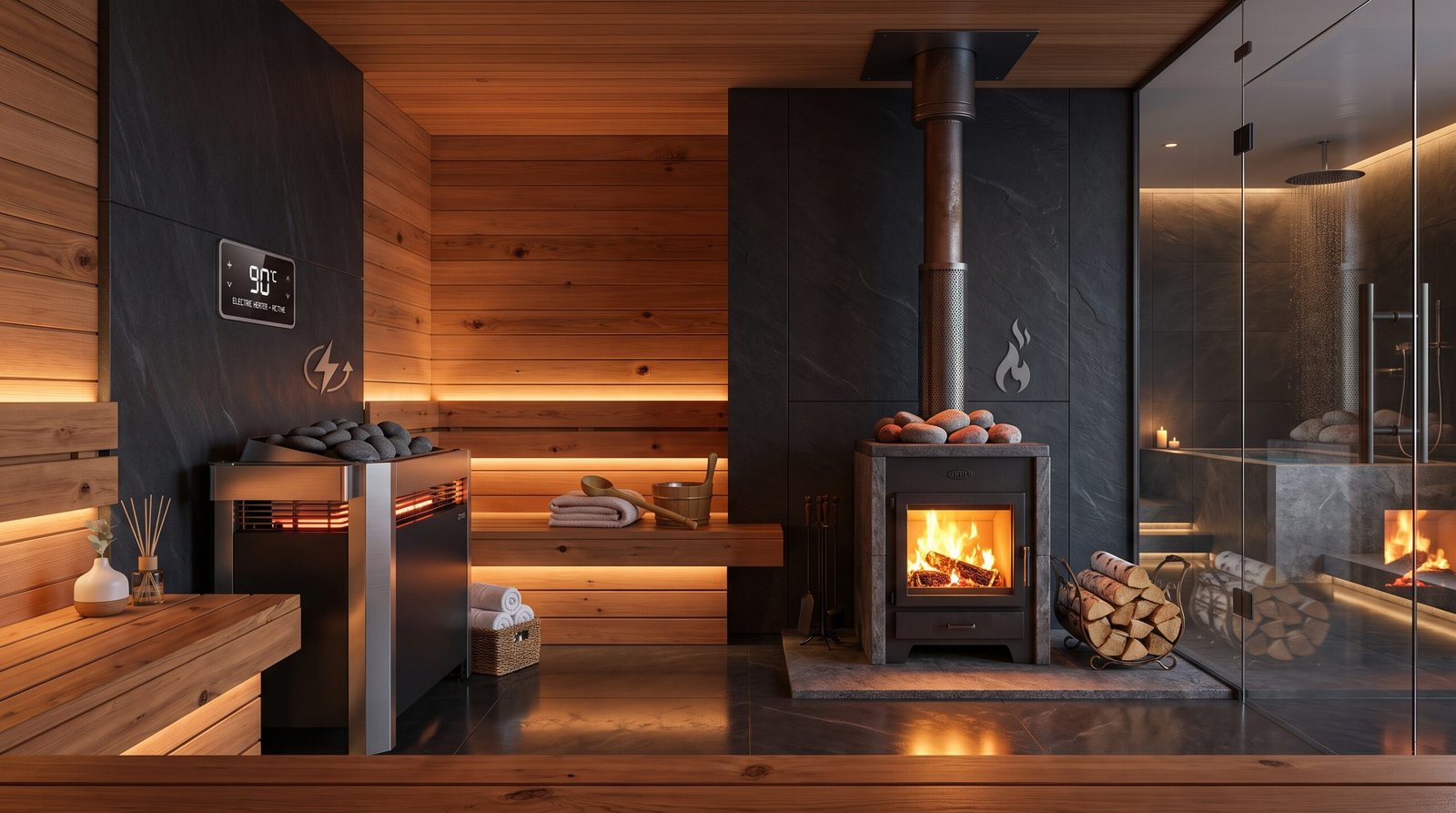
Sauna heaters form the actual heart of any home sauna, shaping everything from setup complexity to the day to day experience of using it. Choosing between electric and wood burning options affects installation requirements, ongoing costs, and even the character of the heat itself.
Electric & Wood-Burning Heaters each bring distinct advantages depending on your space and priorities. Electric units offer precise temperature control and simpler installation, while wood burning models deliver a more traditional, rustic sauna experience.
Electric & Wood-Burning Heaters differ significantly in setup requirements. Electric models generally need a dedicated circuit, while wood burning units require proper venting and clearance from combustible materials.
Sauna Heaters & Steamers cover more than just basic heat generation. Many modern units combine heating elements with steam generation capability, allowing users to adjust humidity levels alongside temperature for a customized session.
Choosing among Sauna Heaters & Steamers often comes down to whether you prefer a dry heat experience or the option to add humidity for a more traditional steam room feel.
Undersized heaters struggle to maintain consistent temperature in larger spaces. Sauna Heaters & Steamers should always be matched to cubic footage rather than chosen based on price alone.
Indoor & Outdoor Home Saunas require different heater considerations entirely. Outdoor units face greater temperature swings and weather exposure, which affects both heater sizing and insulation needs compared to an indoor installation.
Electric options tend to suit Indoor & Outdoor Home Saunas equally well, while wood burning heaters are more commonly chosen for outdoor or cabin style setups where the traditional aesthetic matters more.
Budget, available space, and desired experience should all factor into a final heater choice. Electric options generally require less ongoing maintenance than wood burning alternatives.
Wood burning heaters appeal most to buyers prioritizing an authentic, traditional experience over pure convenience, accepting the added maintenance that comes with that choice.
Electric heating elements generally require minimal upkeep beyond periodic inspection and occasional element replacement after years of regular use. Wood burning units need more frequent attention, including ash removal, chimney inspection, and a steady fuel supply.
While wood burning heaters may cost less to operate per session, the ongoing labor and fuel logistics should factor into any honest long term cost comparison between the two heater types.
Indoor & Outdoor Home Saunas both perform differently depending on regional climate. Colder provinces demand heaters with higher output capacity to overcome heat loss, particularly for outdoor installations exposed directly to winter conditions.
Working with a dealer familiar with regional climate demands helps ensure Indoor & Outdoor Home Saunas are properly sized for consistent performance, regardless of how harsh the local winter gets.
Electric heaters require professional installation to meet local electrical codes. Wood burning units need professional installation as well, a WETT certified installer is required to ensure adequate clearance from combustible materials and a properly maintained chimney or venting system to prevent carbon monoxide buildup.
Choosing the right heater shapes the entire sauna experience for years of ownership. Chinook Hot Tubs & Saunas carries a full range of sauna heaters suited to both electric and wood burning setups.
Neither option is universally better. Electric heaters offer convenience and precise control, while wood burning units deliver a more traditional experience with additional maintenance requirements.
This depends on priorities. Electric suits those wanting simple, consistent operation, while wood burning suits those who value tradition and don’t mind extra upkeep.
Most home saunas use either an electric heater connected to a dedicated circuit or a wood burning stove vented properly according to local building codes.
Electric sauna heaters typically use a moderate amount of power during active sessions, though actual cost depends on session frequency and length.