

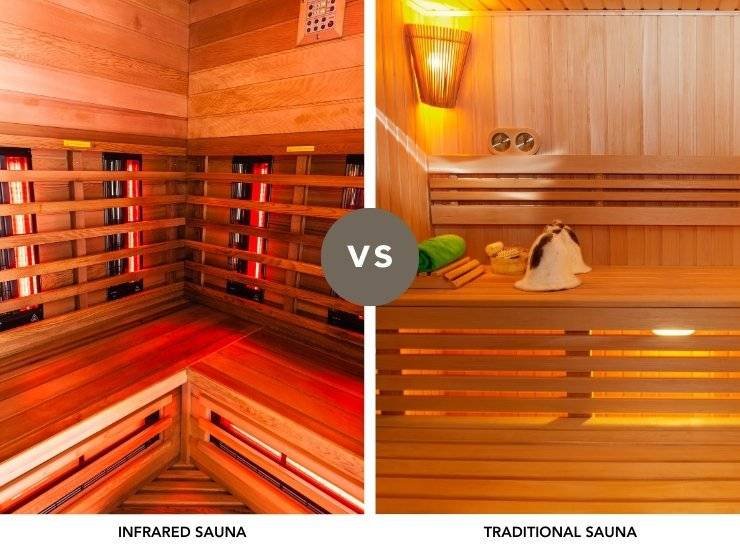
Choosing between an infrared sauna and a traditional sauna involves more than personal preference. These two heat therapy methods operate fundamentally differently.
Perhaps you’re considering adding a sauna to your home but feel overwhelmed by the options. Understanding how each type works helps you make an informed decision.
At Chinook Hot Tubs & Saunas, we guide customers through this choice daily, matching sauna types to individual health goals and lifestyles.
Traditional saunas heat the air around you. They use wood, electric, or gas heaters to raise ambient temperatures to 150-195°F (65-90°C). The hot air then warms your body from the outside in. This method has existed for thousands of years, and many cultures worldwide have their own version of this same ritual.
Humidity plays a crucial role in traditional saunas. Pouring water over heated rocks creates steam, increasing moisture levels. The combination of heat and humidity creates that classic sauna experience many people love.
Your body responds by sweating profusely. The high temperatures trigger maximum perspiration. Heart rate increases as your cardiovascular system works to cool you down.
Infrared saunas use infrared light to directly warm your body. The air temperature remains much lower, typically 120-140°F (49-60°C). This infrared light penetrates your skin, heating you from within rather than warming the surrounding air.
Three types of infrared light exist: near, mid-infrared, and far-infrared. Each penetrates tissue to different depths. Most infrared saunas focus on far-infrared wavelengths, which penetrate deepest into your body, up to 1.5 inches beneath the skin.
The lower air temperature makes infrared saunas more tolerable for many people. You still sweat heavily, but the environment feels less oppressive. Sessions can typically last longer compared to traditional saunas.
Far-infrared wavelengths offer unique therapeutic properties. They vibrate at frequencies that resonate with water molecules in your body. This resonance creates heat from within your tissues rather than on your skin surface.
Deep penetration reaches muscles, joints, and organs. This makes far-infrared particularly effective for chronic pain management. Many arthritis sufferers prefer infrared saunas because the heat reaches inflamed joints directly.
Detoxification happens at a cellular level with far-infrared exposure. The deep heating mobilizes toxins stored in fat cells. Some research suggests this leads to more thorough detoxification compared to surface-level sweating.
Mid-infrared wavelengths penetrate soft tissue better than near-infrared but not as deeply as far-infrared. This intermediate depth proves ideal for improving circulation and reducing inflammation.
Blood flow increases significantly during mid-infrared exposure. Enhanced circulation delivers more oxygen and nutrients to damaged tissues. Athletes often use mid-infrared therapy to speed recovery between training sessions.
Some infrared saunas at Chinook combine multiple wavelengths. These full-spectrum models provide benefits across near, mid-infrared, and far-infrared ranges. You get comprehensive therapeutic effects in a single session.
Waon therapy represents a specific infrared sauna protocol developed in Japan. The term ‘waon’ means ‘soothing warmth.’ This method maintains body temperature around 100.4°F (38°C) for 15 minutes, followed by 30 minutes of rest wrapped in blankets.
Research on waon therapy shows promising cardiovascular benefits. Studies demonstrate improvements in heart failure symptoms, reduced arrhythmias, and enhanced vascular function. Blood pressure tends to normalize with regular waon therapy sessions.
Chronic pain patients report significant relief through waon therapy. The gentle, sustained heat reduces pain perception without the intensity of traditional sauna temperatures. This makes it accessible for people who can’t tolerate extreme heat.
Both sauna types affect blood pressure, but through slightly different mechanisms. Traditional saunas cause immediate vasodilation, as your blood vessels expand from external heat. This temporarily lowers blood pressure during and shortly after your session.
Infrared saunas produce more sustained blood pressure effects. The deep tissue heating triggers longer-lasting vascular changes. Some studies suggest regular sauna use of either type helps maintain healthy blood pressure levels over time.
However, both sauna types require caution for people with cardiovascular conditions. The heat stress on your system can be significant. We always recommend consulting your doctor before starting regular sauna sessions, especially if you have existing heart or blood pressure issues.
Consistency matters more than sauna type for cardiovascular benefits. Regular use, three to four times weekly, shows the most impressive health outcomes. Whether you choose traditional or infrared, establishing a routine brings the best results.
Full spectrum infrared saunas generally edge out traditional saunas for chronic pain management, while far infrared only saunas are about the same as traditional ones. The direct tissue heating reaches pain sources more effectively.
That said, traditional saunas still provide substantial pain relief. The extreme heat relaxes muscles and reduces tension. Many people with chronic back pain prefer the intense heat of traditional saunas.
The lower temperature of infrared saunas allows longer sessions. Extended exposure time means more opportunity for pain-relieving heat to work. You might tolerate 30-40 minutes in an infrared sauna versus 15-20 minutes in a traditional one.
At Chinook, we’ve observed that pain relief preferences vary individually. Some customers swear by traditional sauna intensity, while others find infrared more sustainable long-term. Perhaps trying both types helps you determine which suits your pain management needs.
Infrared saunas consume significantly less electricity. Lower operating temperatures mean less ongoing energy demand.
Traditional saunas require substantial power to maintain high temperatures. Electric heaters draw considerable current, though still not a huge amount due to the relatively short periods they tend to be used for. Wood-burning options avoid electricity costs but involve other considerations like ventilation and fuel supply.
Monthly operating costs differ. An infrared sauna might cost $0.20 – 0.30 for an hour of use (depending on your rates and billing structure), while a traditional sauna might cost $0.60 – 0.90 for that same hour. Particularly large saunas may exceed these estimates, but these would be the average for residential saunas.
Infrared saunas offer simpler installation. Lower end models may plug into standard 120V 15A outlets, but manufacturers of quality infrared saunas have moved over to 120V 20A circuits to provide enough power for small infrareds. Large models may require 240V, but it’s rarely more than 20A service. This keeps installation costs down and provides placement flexibility.
Traditional saunas typically need dedicated 220V circuits. Professional electrical installation adds to upfront costs. However, built-in traditional saunas can increase home value more than portable infrared units.
Ventilation needs differ between sauna types. Traditional saunas require proper air circulation to handle high temperature. Infrared saunas need less ventilation but still benefit from adequate airflow.
Space efficiency favors infrared models. They operate effectively in smaller footprints. You can install a single-person infrared sauna in spaces as small as 3×3 feet. Traditional saunas generally demand more room for proper heat distribution.
Traditional sauna enthusiasts love the authentic experience. The blast of heat when entering, the ritual of pouring water on rocks, and the intense environment, these elements create a powerful sensory experience. It feels like a special event rather than a routine wellness practice.
Infrared saunas feel gentler and more approachable. The comfortable temperature lets you read, meditate, or listen to music without distraction. Many people find this more conducive to regular use.
Breathing comfort differs notably. Traditional sauna air can feel harsh on the respiratory passages. The extreme heat requires conscious breathing. Infrared saunas maintain normal air temperature, making breathing effortless throughout your session.
Both sauna types deliver legitimate health benefits. Traditional saunas excel at providing that intense, authentic experience with powerful cardiovascular conditioning. Infrared saunas offer targeted deep tissue heating, lower operating costs, and easier installation.
At Chinook Hot Tubs & Saunas, we stock both traditional and infrared models because we recognize that different people need different solutions.
Explore our complete sauna collection at Chinook Hot Tubs & Saunas. Our team helps match you with the perfect sauna for your wellness goals, budget, and available space.