

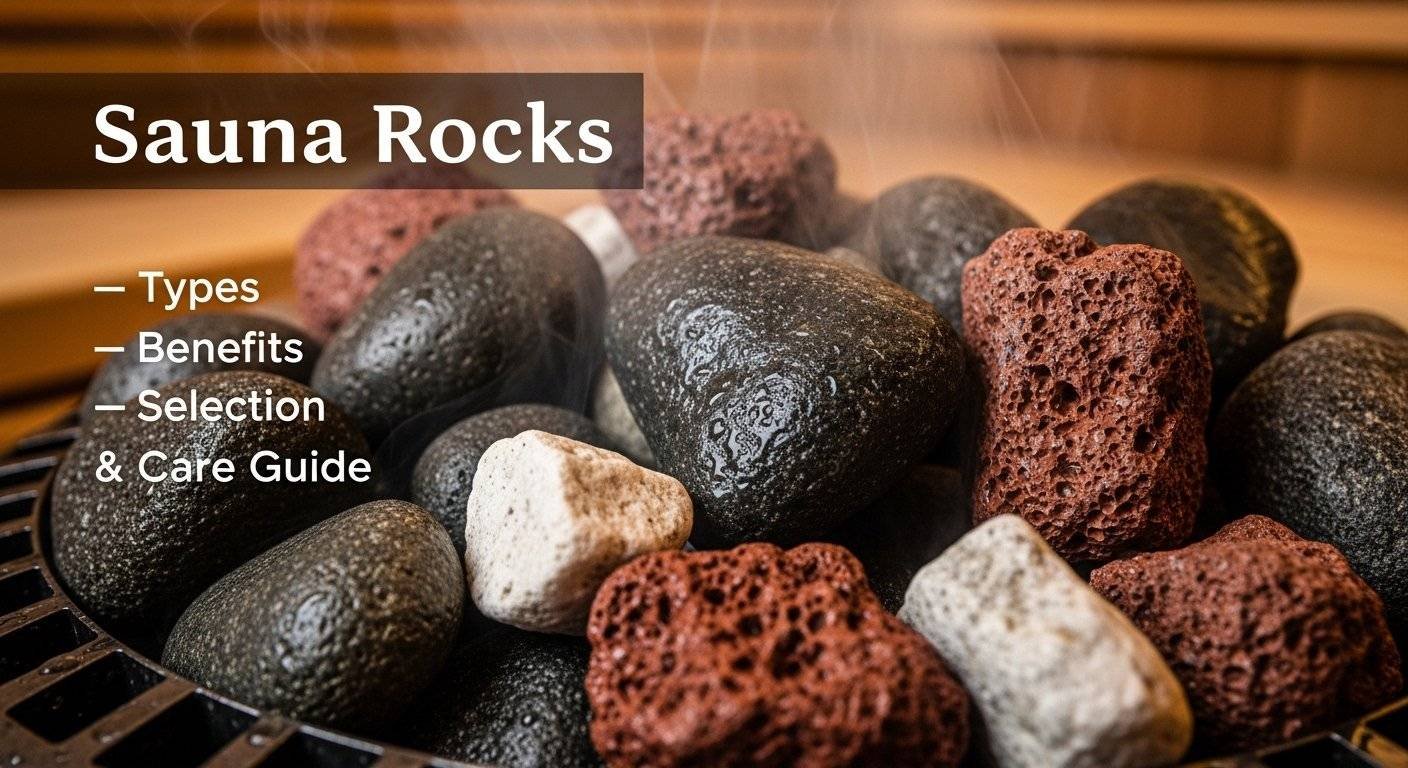
Sauna rocks are one of the most overlooked yet essential components of any sauna experience. The right rocks hold heat evenly, release steam smoothly, and create that perfect humid warmth that defines a great session. At Chinook Hot Tubs & Saunas, we know that getting the details right, including your rocks, makes all the difference.
This guide covers everything you need to know about sauna rocks: what they are, which types to choose, how to stack and care for them, and when to replace them. Whether you’re a first-time sauna owner or a seasoned enthusiast, this is your complete reference.
Sauna rocks, also called kiuas stones or löyly stones, are heat-retaining stones placed on top of a sauna heater. When water is poured over them, they produce steam, called löyly in Finnish, which raises the humidity and perceived heat in the sauna. Without rocks, a sauna heater produces only dry radiant heat, which many find less satisfying.
The rocks are heated by the sauna stove for over 30–60 minutes before use. Their dense mass stores thermal energy and releases it gradually, providing a consistent, stable heat source. When water contacts the hot surface, it instantly vaporizes, filling the room with soft, penetrating steam.
High-quality sauna rocks distribute heat evenly throughout the heater basket, preventing hot spots and uneven steam release. Poor or unsuitable rocks can crack under thermal stress, producing unpredictable steam and potentially damaging your heater. The right rocks make every session more consistent and enjoyable.
Properly sized and stacked rocks protect heater elements from direct water contact, which can cause electrical shorts or damage coils. They act as a buffer layer, absorbing the shock of water and distributing heat before it reaches sensitive components. Using the wrong rocks can significantly shorten your heater’s lifespan.
Olivine diabase is widely considered the gold standard for sauna rocks. It has exceptional heat retention, very low water absorption, and excellent resistance to thermal shock — meaning it won’t crack easily through repeated heating and cooling cycles. It’s the most popular choice among professional sauna builders across Scandinavia and Canada.
Peridotite is a dense, durable igneous rock with high heat capacity and good moisture resistance. It produces smooth, gentle steam and holds up well over years of use. It’s slightly harder to source than diabase, but it is an excellent long-term investment for sauna enthusiasts.
Vulcanite and basalt are affordable, widely available alternatives. They perform reasonably well in lower-temperature saunas but are more prone to cracking over time compared to diabase. Many sauna kits include basalt rocks, making them a practical entry-level option for first-time owners.
River rocks and fieldstones collected from nature may seem like a free and natural option, but they’re genuinely dangerous in a sauna. These rocks often contain trapped moisture or mineral compositions that cause them to explode when rapidly heated. Never use randomly collected stones in your sauna heater.
Sandstone, limestone, and other sedimentary rocks are too porous and structurally weak for sauna use. They absorb water, crack under heat, and can crumble into the heater elements over time. Granite, while durable, also has a high silica content that can cause unpredictable cracking under repeated thermal cycling.
Smaller rocks are best placed at the top and edges of the rock pile, where they fill gaps and help distribute heat. They heat up more quickly but also lose heat faster. A mix of sizes in your heater provides better overall heat retention than using uniform-sized rocks.
Larger rocks go at the bottom of the heater basket, closest to the heating elements. Their greater mass means they hold heat longer and release steam more slowly and smoothly. Most sauna heater manufacturers recommend a blend of medium (6–10 cm) and large rocks for optimal performance.
The number of rocks depends entirely on your heater’s rock capacity, which is listed in the manufacturer’s specifications. Most residential electric heaters require between 20 and 60 kg of rocks. Always fill to the recommended capacity; too few rocks reduce steam quality, while too many can block airflow and overstress the heater.
When replacing rocks, it’s generally best to replace the entire load at once rather than mixing old and new rocks. Old rocks may have different thermal properties, leading to uneven heating. Budget for a full replacement set every 3–5 years as part of your regular sauna maintenance.
Place your largest rocks on the bottom of the heater basket, surrounding and protecting the heating elements. Build up with medium-sized rocks in the middle, and finish with smaller rocks on top and around the edges. Leave small gaps between rocks to allow airflow and proper heat circulation.
Never pack rocks so tightly that air cannot flow between them; this restricts heat distribution and can overheat the lower elements. Avoid placing rocks directly against thermostat sensors or electrical components. Check the rock arrangement after each use and re-stack any that have shifted.
New sauna rocks should always be rinsed with clean water before first use to remove dust, debris, and any loose mineral particles. Spread them on a clean surface and let them air dry completely before placing them in the heater. Installing damp rocks can cause steam issues and potential damage to the heater.
Clean your rocks every 6–12 months by removing them from the heater, rinsing with water, and scrubbing off any mineral deposits or residue. Allow them to dry fully before reinstalling. Avoid using soap, bleach, or chemical cleaners on sauna rocks, residue will vaporize during heating and contaminate the sauna air.
Most sauna experts recommend replacing rocks every 3–5 years for regular home use. Heavy use, such as daily sessions or commercial settings, may require replacement every 1–2 years. The frequency depends on the quality of the original rocks, water mineral content, and how consistently the sauna is maintained.
Hard water with high mineral content deposits scale on rocks more quickly, degrading their surfaces and reducing heat retention. Using fragrances or essential oils directly on rocks, rather than diluting them in water, also accelerates deterioration. Filtered or softened water extends rock life considerably.
Visible cracks, crumbling edges, or rocks that have broken apart are clear signs it’s time for a replacement. Deteriorating rocks shed fragments into the heater, potentially blocking vents or damaging elements. Any rock that shows structural compromise should be removed immediately.
If your sauna takes noticeably longer to reach temperature or steam production has decreased, worn rocks may be to blame. Rocks that have lost their density and heat-retention capacity won’t perform as designed. A simple full rock replacement often resolves these issues without any heater repair.
Rocks that are intact, not cracked, and still hold their original weight and density can be reused after thorough cleaning. Test each rock individually by inspecting it closely and tapping it with another rock; a dull thud rather than a clear ring suggests internal cracking. Only reuse rocks that pass this visual and auditory check.
If rocks have visible cracks, have lost significant mass through chipping, or have an unusual coating of mineral scale, it’s safer to replace them. Trying to save a few dollars by reusing compromised rocks can damage your heater, which costs far more to repair or replace.
Electric heaters have more precise temperature controls and tend to cycle on and off, which means rocks experience greater thermal stress from repeated heating and cooling. Denser rocks, such as olivine diabase, perform best in this application. Follow your heater manufacturer’s specifications for rock size and weight precisely.
Wood-burning stoves produce a more gradual, sustained heat, which is gentler on rocks overall. A wider range of rock types performs acceptably in wood stoves, though diabase is still preferred. The rock cage in wood stoves is often larger, allowing for more rock mass and more dramatic steam production.
High-quality, dense rocks produce what Finns call soft löyly, smooth, enveloping steam that feels comfortable even at high temperatures. Low-quality or worn rocks create harsh, uneven steam that can feel hot and sharp on the skin. The difference is immediately noticeable to experienced sauna users.
If you use sauna fragrances or essential oils, always dilute them in water before pouring over rocks; never apply them directly. Concentrated oils can leave sticky residues that degrade rock surfaces and create unpleasant odours when reheated. Birch, eucalyptus, and pine scents are popular traditional choices.
The most dangerous mistake is using unsuitable rocks collected from nature, rivers, or construction sites. These can contain moisture pockets or unstable mineral compositions that cause violent cracking or explosion when heated. Always purchase rocks specifically rated and sold for sauna use.
Using too many rocks blocks airflow and can cause the heater to overheat, tripping safety cutoffs or burning out elements. Too few rocks reduces heat retention and steam quality while increasing wear on remaining rocks. Always follow the rock capacity rating for your specific heater model.
Quality sauna rocks, like olivine diabase, typically cost $40–$80 CAD per 20 kg bag. A full heater load for a standard home sauna ranges from $80 to $200, depending on quantity and rock type. Budget-friendly basalt rocks are available for $20–$50 per 20 kg but require more frequent replacement.
Investing in quality rocks upfront is almost always more economical over the long run. Premium rocks that last 5+ years with proper care cost less total than replacing cheap rocks every 1–2 years. Chinook Hot Tubs & Saunas carries a selection of sauna rocks suited to every budget and heater type.
No. Garden rocks and stones collected from nature are unsafe for use in saunas. They may contain moisture or unstable minerals that cause cracking or explosion when heated. Always use rocks specifically manufactured and rated for sauna heaters.
Inspect rocks for visible cracks, crumbling, or significant weight loss from chipping. Tap each rock; a hollow or dull sound indicates internal cracking. If your sauna takes longer to heat or steam quality has dropped noticeably, a rock replacement is likely overdue.
All traditional Finnish-style sauna heaters, both electric and wood-burning, require rocks. Steam saunas and infrared saunas do not use rocks. Always check your specific heater type and follow the manufacturer’s guidelines for rock quantity and placement.